Machine Learning Researcher from Denmark. My research interests are interpretability, robustness, and compositionality. My work has been published at ACL, EMNLP, and at workshops at NeurIPS.
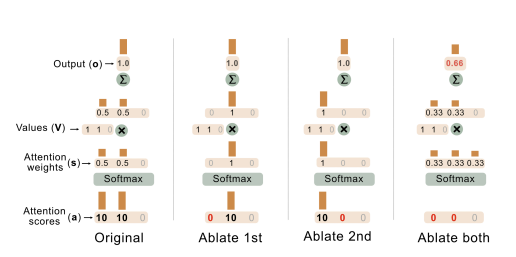
A novel form of self-repair in the softmax operation leads to flaws in pertubation and gradient based attribution methods. GIM (gradient interaction modification) is a new method that alleviates many existing issues with gradient-based attribution methods and achieves state-of-the-art on multiple benchmarks.
Code Like Humans: A Multi-Agent Solution for Medical Coding
Andreas Motzfeldt, Joakim Edin, Casper L. Christensen, Christian Hardmeier, Lars Maaløe, Anna Rogers
Empirical Methods in Natural Language Processing (EMNLP), 2025
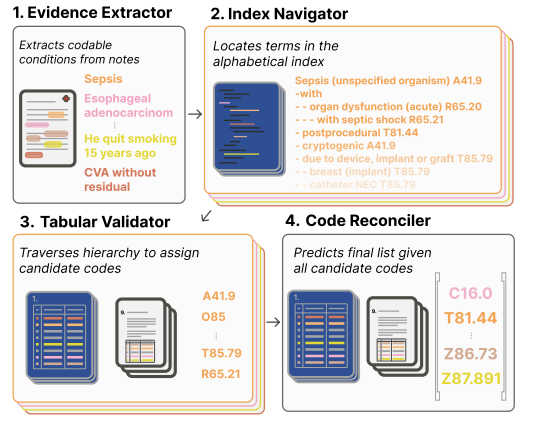
A multi-agent system that performs clinical coding with human-like reasoning steps; demonstrates competitive accuracy on medical coding benchmarks and outperforms existing approaches on rare codes with no fine-tuning.
Bi-Axial Transformers: Addressing the Increasing Complexity of EHR Classification
Rachael DeVries, Casper L. Christensen, Marie Lisandra Zepeda Mendoza, Ole Winther
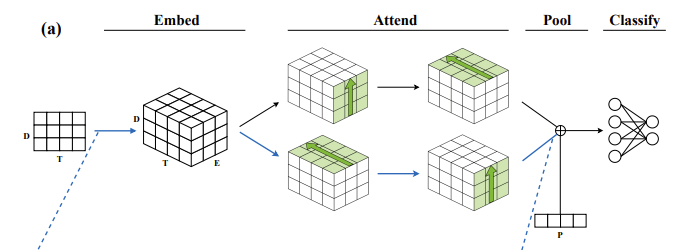
Introduces the Bi-Axial Transformer (BAT) that attends across both clinical-variable and time axes in EHRs. BAT achieves SOTA on sepsis prediction, is competitive for mortality classification, and shows robustness to missingness; baselines were re-implemented in PyTorch for reproducibility.
Normalized AOPC: Fixing Misleading Faithfulness Metrics for Feature Attribution Explainability
Joakim Edin, Andreas Geert Motzfeldt, Casper L. Christensen, Tuukka Ruotsalo, Lars Maaløe, Maria Maistro
Association for Computational Linguistics (ACL), 2025
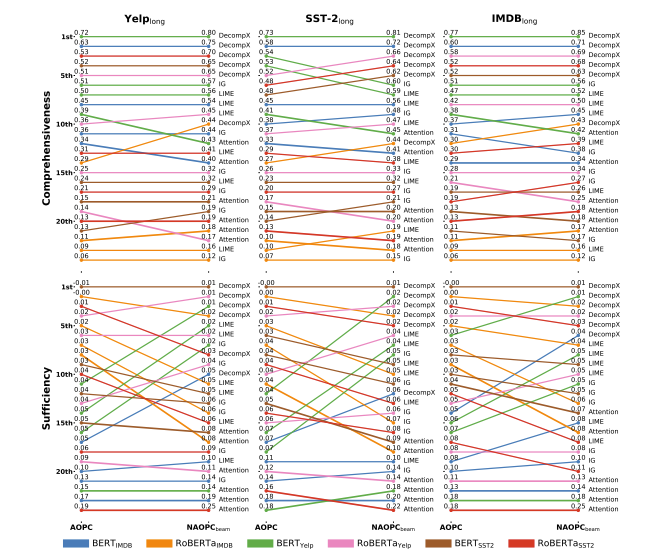
AOPC is frequently used to assess the quality of explanations generated by attribution methods. However, the method suffers from a fundamental flaw when features interact that renders the finding of many previous studies invalid. We identify the cause of the problem and propose a solution.
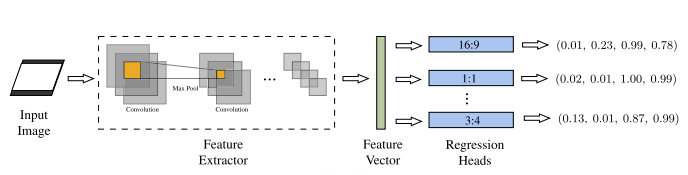
An Experience-Based Direct Generation Approach to Automatic Image Cropping
CNN-based method that crops images directly—no explicit saliency modeling or candidate ranking—trained on editor-curated crops and producing boxes for multiple aspect ratios.